
I suppose it happens to most of us when we first start collecting typewriters. A glossy machine, with pristine decals, casts its spell upon us. Speaking for myself, I lacked the skills to decipher what was under the hood of this typewriter.
I bought this 1933 L.C. Smith at an antique mall. The machine typed. The carriage advanced. I was new to typewriters and especially to pre-1940s machines. I was swept up by a nostalgia for a time that came long before I was born.
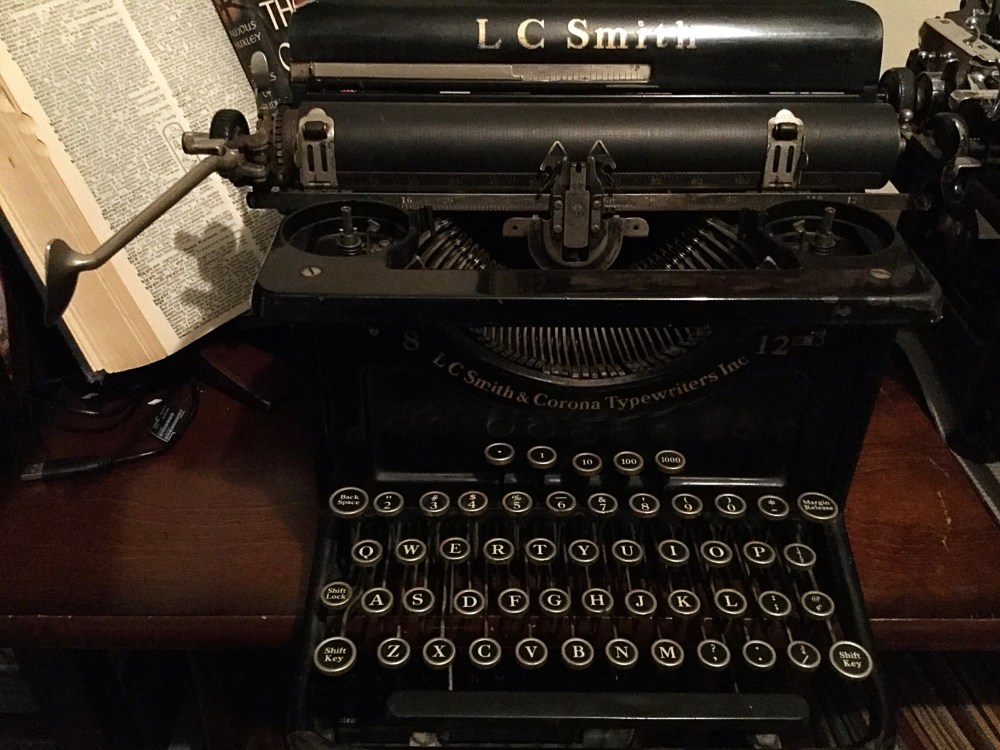
I rarely saw such a machine my backyard. I was smitten. I took it home, having paid over a $100 to a seller who seemed to know her stuff. She also seemed honest. “Seems” is a tricky word.
I tinkered with it for a while. At some point I noticed the cracked frame holding the carriage. The screws held it in place, but this machine had been in an accident. I also noticed the bad left platen knob–but that I saw when I bought it. I also noted the improvised right-front foot. I soon became discouraged. How foolish of me to have made the purchase. This pretty machine seemed destined for useless decoration. That’s where it ended up until yesterday, when I decided to do some tinkering.
I glued the left knob with an epoxy. I fortified the cracked frame.
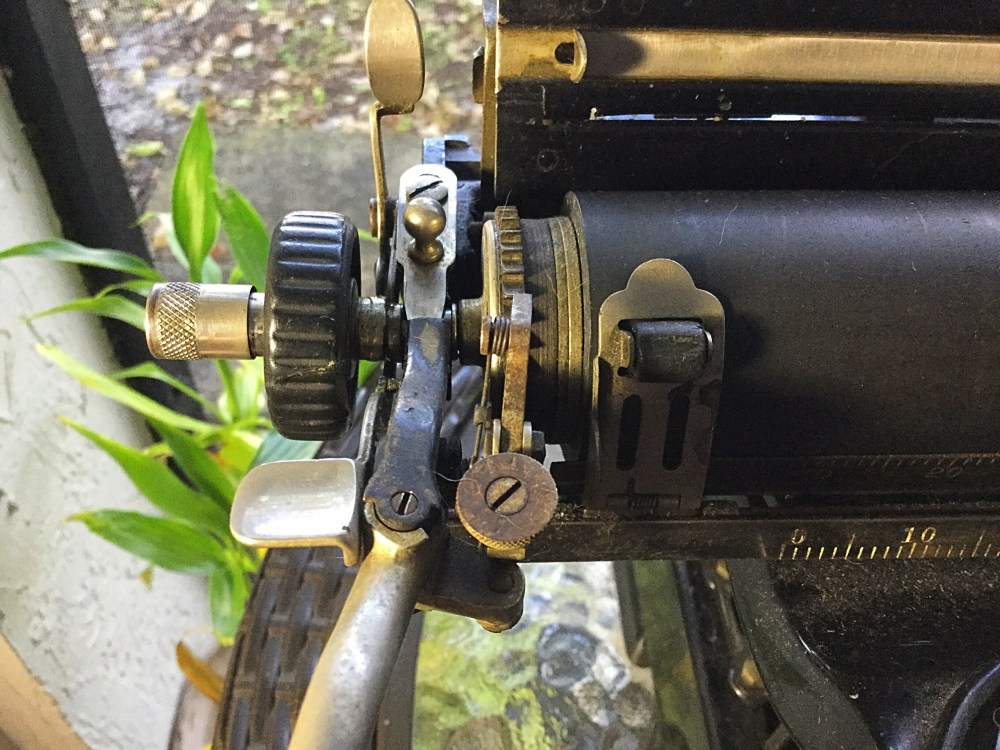
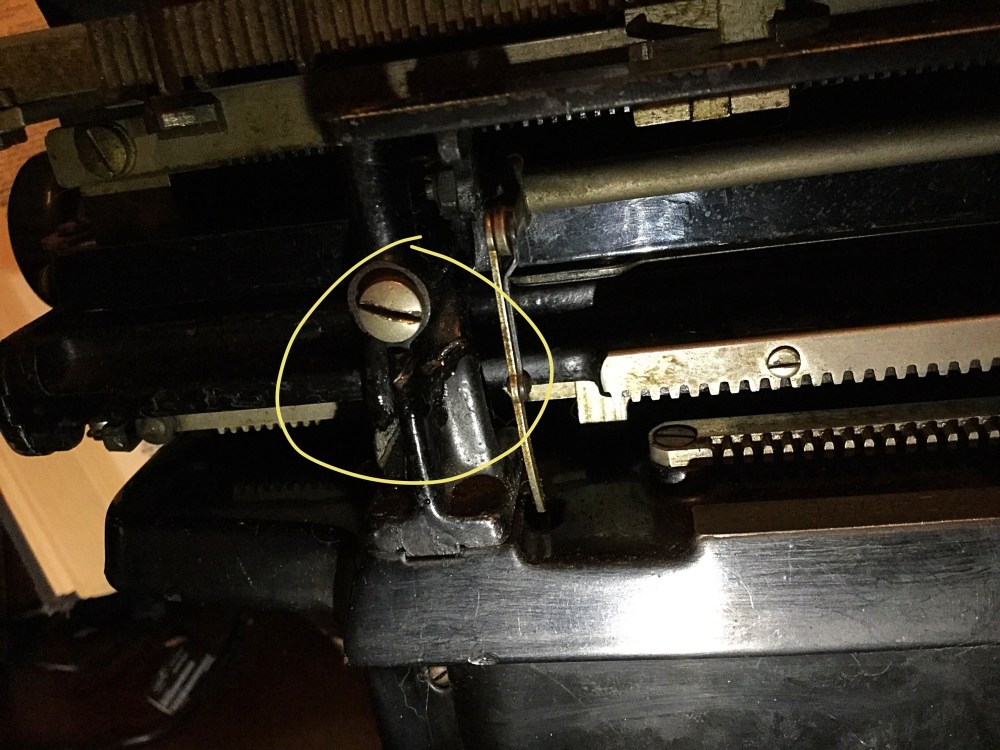
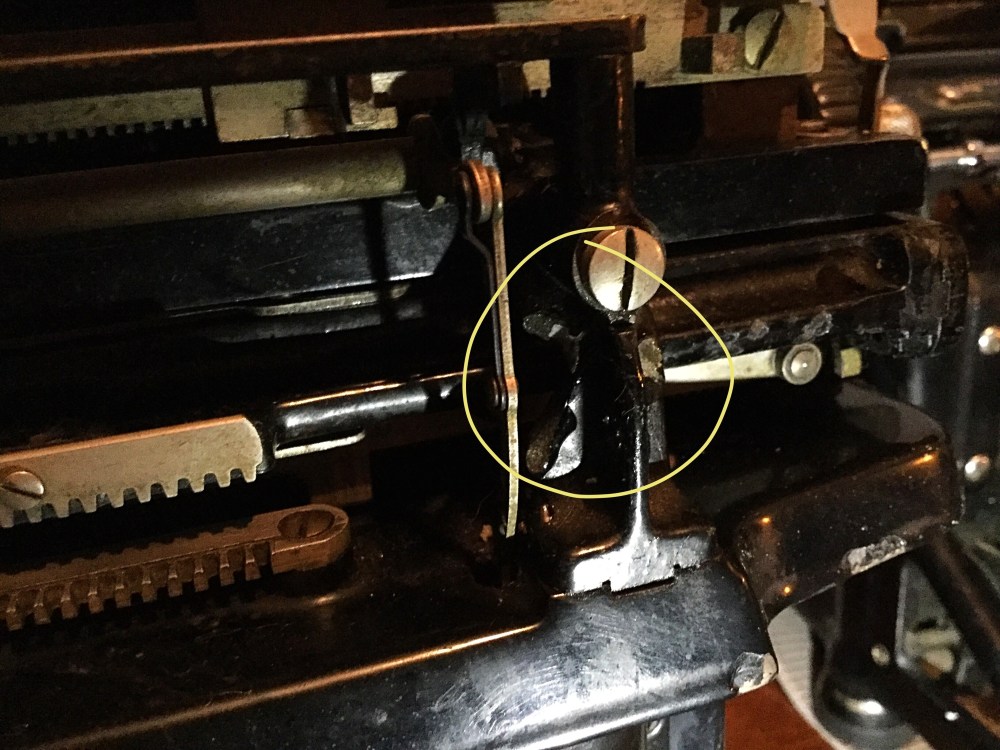
I did some minor cleaning with mineral spirits and cleaned up the metal parts with a brass Brillo. The machine, in fact, types. The bell mechanism is obstructed, but I think I can fix that. The ribbon-direction mechanism also needs more work.
I took a look underneath. Low and behold: some jerk rigged the tab keys, partly obstructing them, with what appears to be a coat-hanger. Now that’s sleaze.
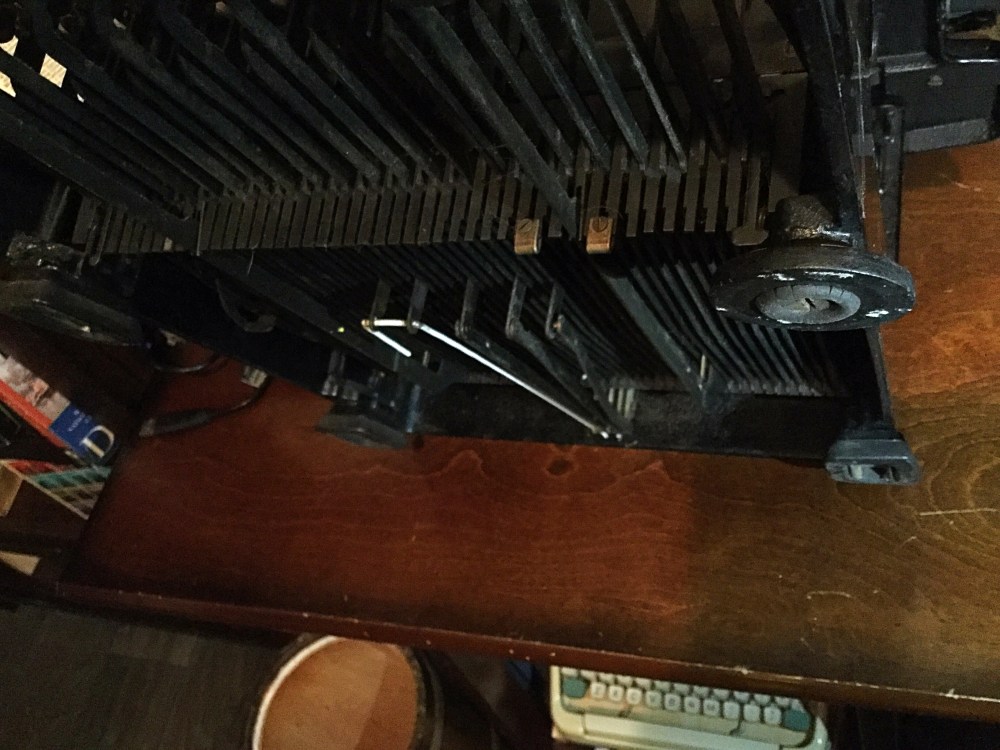
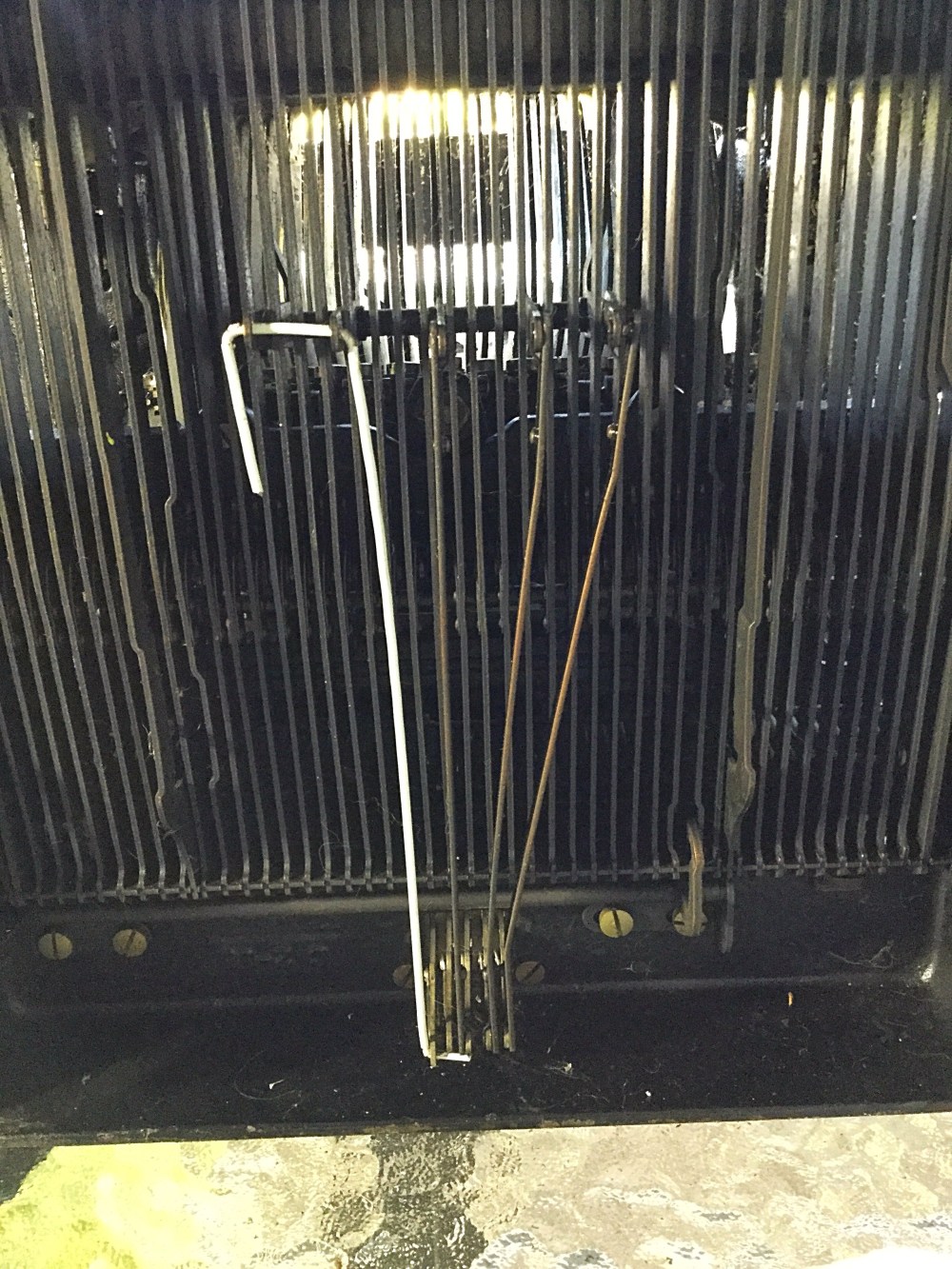
Oh, I forgot to mention that the carriage wobbles a bit. I have no idea if this is or isn’t supposed to happen with these models. The funny thing is that the machine, in spite of all of its issues, types well. I am not sure what to so with it. I am considering selling it, but for how much? I generally sell my typewriters for low prices, as long as I make a small profit. I will never recover from this purchase. Sell it for $20, $40, $60? What is certain is that I will be upfront about the machine’s condition. There’s a special place in hell for people who sell lemons.
I wonder if my library would enjoy putting it on display.
 The Untimely Typewriter:Daily Writings Against the Tides of Distraction
I don’t get it. I mean, I understand that the typewriter has had injuries, but while you mention that the machine types–and well–there’s nothing said about how the defects affect the functionality. It has a cracked frame and the right front foot isn’t what it once was. And it had a bad platen knob, which you saw before you bought it. What exactly is the problem? And what exactly is the deal with the tab keys? Why would someone “obstruct” them with a jerry-rigged solution like that?
The only real negatives you mention are that the carriage wobbles “a bit” and the bell doesn’t ring (but you can fix it). It looks good and it types well, by your own testimony. What’s the con?
LikeLiked by 1 person
True. I guess I’ll always be a bit miffed by the price I paid. I have a streak of honesty in me. When I sell a typewriter to someone, I pick a very fair price and I give them the lowdown on the strengths and weaknesses of the machine.
The jerry-rigged part is weird. To do it right, the person should have used two wires. Instead he or she went with a half-fix, which obstructed two of the preset tabs. Pretty lazy, I think. It was the seller, I believe. Later, when I was less of a newbie, I saw other typewriters in her booth. More shenanigans.
LikeLike
That makes sense. It’s a question of honesty on the part of the seller.
I’ve been fortunate. The only time I’ve been deceived by a seller, it was on eBay and I got an immediate refund without having to return the (non-functional) typewriter (which still sits in my attic). Of course, I also wildly overpaid for at least one typewriter as a newbie–but it really was (is) in mint condition.
LikeLiked by 1 person
I had a similar experience with an allegedly mint, restored typewriter that I bought before I became an informed buyer. Turned out the typewriter had been retrofitted with third-party parts, didn’t fit into its case properly, and had several minor but annoying operational issues. These days I’d have noticed these problems immediately, of course. I didn’t want to throw good money after bad in trying to fix these problems, so I briefly thought about selling it to someone — and providing a painfully lengthy explanation of its problems. But then I’d own the tech support problems, right? I then thought about donating the typewriter to a charity thrift store. Again, similar problems. I’d feel guilty as hell about someone getting all excited about finding a bargain and then ending up in the same situation as me. So I left the typewriter out in the alley next to the dumpster and it was gone with an hour. No promises, no regrets.
LikeLiked by 1 person
Good point about the tech support. I’d feel fine selling at a low price to someone interested in displaying the machine or to someone who comprehends the issues. I also could make it a display piece at my office.
Really, I just bought a Halda standard and now I need to make new room.
LikeLike
I typed on a Facit standard at the same time I was trying the Hermes and Olympias. Now that had a nice touch! But I already have three standards (and shelf space for two).
LikeLiked by 1 person
I haven’t had the pleasure to try a Facit. Someday . . .
LikeLike
I have purchased typewriters from people who clearly didn’t understand the machines, and were ignorant about any technical issues. It is very sad to see someone try to hide/disguise issues intentionally to get a few more bucks out of such an item. If it came from a store, I would post a review on their Google page and rate them – that is where it can actually impact them. When I travel, Google is how I locate nearby opportunities like that, and such a review would make me very wary indeed!
LikeLiked by 1 person
Her booth has long since disappeared. I wonder if one can rate booths in malls. That certainly would help.
LikeLike
Well, I guess the fact that she is no longer there is a good thing in any case! Maybe there were other complaints about other items?
LikeLiked by 1 person
Sometimes you just gotta swallow the loss and get on with living. I’m lucky enough to have a local shop that’ll take my lemons gratis and I know the poor suckers will end up being parts to repair other machines. It doesn’t get my money back, but it’s light on the soul. It also helps that I really have never spent much money on any particular machine, except when it comes to replacing rubber – but then I know the machine is otherwise excellent.
LikeLiked by 1 person
Sound advice. Live and learn.
I need to bite the bullet and buy some rubber for a couple of machines.
LikeLike
Yes, you overpaid, but at least it didn’t come to all that much. I wouldn’t be surprised if the seller actually didn’t notice the problems; some people don’t understand the typewriters they sell, at all (and don’t want to learn — that’s the culpable part).
I have used a coat hanger myself to replace the missing link between tab key and tabulator mechanism. Those links aren’t firmly attached and can easily fall out on L.C. Smiths.
LikeLiked by 1 person
This person sold a few typewriters, all of which—one I developed an eye for it—were being sold at prices too high for damaged goods.
The use of a hanger was fine, but it was a shoddy fix, creating obstructions instead of solutions. This seller knew they were lemons.
LikeLike